About 43 minutes
Fishin' Jimmy — A Closer Reading
Adventure Picaresque Fiction
9,773 recorded words. 21 minutes difference from this book's estimate.
View Gutenberg source #12417
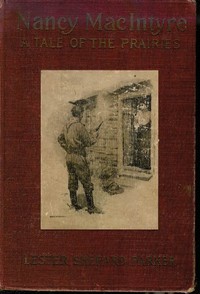
For Nancy MacIntyre: A Tale of the Prairies — Key Ideas to Explore, the stored edition analysis reports 14,634 words, 1 hr 4 min estimated reading time, and 3 detected text sections.
The text analysis averages about 25.4 words per sentence, while the detected sections provide another way to judge how the source is divided.
Project Gutenberg metadata also associates the work with “Poetry,” connecting these edition facts with the source record’s subject description.
Explore this collection
These alternatives are selected using recorded categories and estimated reading time.
About 43 minutes
Adventure Picaresque Fiction
9,773 recorded words. 21 minutes difference from this book's estimate.
View Gutenberg source #12417About 97 minutes
Adventure Picaresque Fiction
22,245 recorded words. 33 minutes difference from this book's estimate.
View Gutenberg source #10690About 105 minutes
Adventure Picaresque Fiction
23,947 recorded words. 41 minutes difference from this book's estimate.
View Gutenberg source #7620Search stored excerpts and compare books → Choose by your preferences →
Choices use stored catalog measurements. Estimates vary with reading speed. A shared category is a catalog label, not a claim that two books have the same argument or literary quality.
Search reads excerpt text stored with this catalog and links to its associated Gutenberg record. The connection is stored in the site database; this tool does not recheck that every excerpt is word-for-word identical to that external record. Excerpt search does not cover every chapter and does not verify historical publication dates.
Catalog snapshot checked: 2026-09-25. Coverage: 97 public books, 97 available source excerpts.
Read the complete public-domain text at its original source.
Read on Project GutenbergLester Shepard Parker's Nancy MacIntyre: A Tale of the Prairies opens not with Nancy herself but with Billy's internal monologue in verse, a revery that establishes his awkwardness and jealousy. The poem's structure alternates between Billy's subjective reflections and objective narrative passages, a pattern that persists across the excerpts. The work is divided into titled sections—'Billy's Revery,' 'The Quarrel,' 'The Disappointment'—each advancing the plot while maintaining a consistent first-person or third-person limited perspective. This editorial note focuses on how the poem's formal choices, recurring images, and shifts between inner thought and external action shape the reader's experience of the prairie setting and the central conflict.
The opening section, 'Billy's Revery,' is written entirely in Billy's voice, using rhymed quatrains to convey his frustration and infatuation. Lines such as 'My tongue gets hitched and hobbled' reveal his self-consciousness, while the comparison of courting to breaking a horse ('If this making love to women / Went like breaking in a horse') ties his emotional state to his frontier labor. The poem's meter—iambic tetrameter with alternating rhymes—creates a sing-song quality that contrasts with the seriousness of his jealousy toward Jim Johnson. This interior focus is interrupted only by the narrative sections that follow, where the third-person voice describes events Billy cannot witness, such as the arrival of Tom Frothingham's wagon. The shift from first-person to third-person marks a structural division between Billy's limited perspective and the broader story.
Two images recur across the excerpts: the prairie schooner and the cactus. In section 13, Frothingham's wagon is described as 'a vessel on the ocean / Under taut and close-reefed sail,' a simile that echoes the earlier illustration caption 'Loaded up their prairie schooner.' The cactus appears in an earlier illustration caption: 'Then I dragged him on the prairie / Through a Turk's Head cactus bed.' These images ground the poem in the physical realities of the Plains—the vast, ocean-like landscape and the punishing vegetation. The schooner also serves as a symbol of movement and change, as characters arrive and depart, while the cactus suggests pain and endurance. The poem's illustrations, listed in the contents, reinforce these visual motifs, though the text itself relies on such concrete details to evoke the setting.
The narrative moves between confined and open spaces: Billy's dugout, the prairie, and the wagon. In section 10, Billy lies 'helpless' in a dugout with a 'dingy window pane,' while later, Frothingham's wagon appears 'o'er the hill's low summit.' The dugout represents stasis and illness; the wagon, mobility and news. The poem's structure alternates between these settings, with each shift advancing the plot. For instance, the transition from Billy's fevered hallucinations—where he sees Nancy's face in the window—to Frothingham's arrival marks a turn from interior crisis to external revelation. This movement is not merely scenic but thematic: the dugout confines Billy physically and mentally, while the wagon brings information that propels the story forward.
In sections 14–17, Billy becomes a passive listener as Frothingham recounts events from the outside world. The poem shifts to reported speech: 'Bit by bit he told the story.' Billy's physical weakness—'pale and careworn features'—contrasts with Frothingham's vigorous narration. This asymmetry creates tension: Billy cannot act, only hear. The news that Johnson has jumped his claim and that Nancy's father 'got the moving notion' places Billy at a disadvantage. The poem's structure here mirrors the earlier revery: Billy is again trapped in his own thoughts, but now those thoughts are shaped by another's words. This section demonstrates how Parker uses the verse form to dramatize powerlessness, as Billy's interiority is invaded by external events he cannot control.
Readers attentive to the poem's formal shifts will notice how Parker uses verse to compress time and emotion. The alternation between Billy's voice and the narrator's, and between confined and open spaces, creates a rhythm that mirrors the prairie's own extremes. The excerpts suggest a work that values interior experience as much as action, though the full arc of the story remains unknown. This edition invites readers to observe how the poem's structure and imagery work together to evoke a specific frontier psychology.
Reading about the prairie schooner’s slow crawl across the verse-novel brought back my grandmother’s story of crossing Kansas as a girl, the horizon never changing. That same quiet ache of waiting returned when I later sat with the wanderer in A Desperate Chance; Or, The Wizard Tramp's Revelation, a Thrilling Narrative — Reading Notes, his road just as long and lonely. Both books left me staring out a window, feeling the weight of distance.
Use these questions to collect your thoughts before moving on.