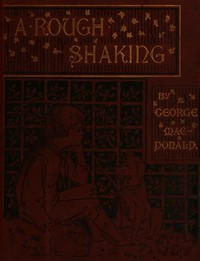
A Rough Shaking — Context and Discussion
Edition facts
For A Rough Shaking — Context and Discussion, the stored edition analysis reports 114,691 words, 8 hr 19 min estimated reading time, and 69 detected text sections.
The text analysis averages about 16.1 words per sentence, while the detected sections provide another way to judge how the source is divided.
Project Gutenberg metadata also associates the work with “Christian life -- Juvenile fiction,” connecting these edition facts with the source record’s subject description.
Calculated from edition completeness, EPUB availability, text structure and catalogue metadata. Not a user rating.
How this score is calculated
- Description quality20 pts
- Title & short description10 pts
- Source metadata20 pts
- Text length15 pts
- Chapters / structure15 pts
- EPUB file integrity20 pts
Total of 100 points, scaled to a 2.5-5.0 range. Editions with an empty description or a missing EPUB file are not scored.
Read the Text
HOW I CAME TO KNOW CLARE SKYMER.
It was a day when everything around seemed almost perfect: everything does, now and then, come nearly right for a moment or two, preparatory to coming all right for good at the last. It was the third week in June. The great furnace was glowing and shining in full force, driving the ship of our life at her best speed through the ocean of space. For on deck, and between decks, and aloft, there is so much more going on at one time than at another, that I may well say she was then going at her best speed, for there is quality as well as rate in motion. The trees were all well clothed, most of them in their very best. Their garments were soaking up the light and the heat, and the wind was going about among them, telling now one and now another, that all was well, and getting through an immense amount of comfort-work in a single minute. It said a word or two to myself as often as it passed me, and made me happier than any boy I know just at present, for I was an old man, and ought to be more easily made happy than any mere beginner.
I was walking through the thin edge of a little wood of big trees, with a slope of green on my left stretching away into the sunny distance, and the shadows of the trees on my right lying below my feet. The earth and the grass and the trees and the air were together weaving a harmony, and the birds were leading the big orchestra--which was indeed on the largest scale. For the instruments were so different, that some of them only were meant for sound; the part of others was in odour, of others yet in shine, and of still others in motion; while the birds turned it all as nearly into words as they could. Presently, to complete the score, I heard the tones of a man’s voice, both strong and sweet. It was talking to some one in a way I could not understand. I do not mean I could not understand the words: I was too far off even to hear them; but I could not understand how the voice came to be so modulated. It was deep, soft, and musical, with something like coaxing in it, and something of tenderness, and the intent of it puzzled me. For I could not conjecture from it the age, or sex, or relation, or kind of the person to whom the words were spoken. You can tell by the voice when a man is talking to himself; it ought to be evident when he is talking to a woman; and you can, surely, tell when he is talking to a child; you could tell if he were speaking to him who made him; and you would be pretty certain if he was holding communication with his dog: it made me feel strange that I could not tell the kind of ear open to the gentle, manly voice saying things which the very sound of them made me long to hear. I confess to hurrying my pace a little, but I trust with no improper curiosity, to see--I cannot say the interlocutors, for I had heard, and still heard, only one voice.
About a minute’s walk brought me to the corner of the wood where it stopped abruptly, giving way to a field of beautiful grass; and then I saw something it does not need to be old to be delighted withal: the boy that would not have taken pleasure in it, I should count half-way to the gallows. Up to the edge of the wood came, I say, a large field--acres on acres of the sweetest grass; and dividing it from both wood and path stood a fence of three bars, which at the moment separated two as genuine lovers as ever wall of “stones with lime and hair knit up” could have sundered. On one side of the fence stood a man whose face I could not see, and on the other one of the loveliest horses I had ever set eyes upon. I am no better than a middling fair horseman, but, for this horse’s sake, I may be allowed to mention that my friends will all have me look at any horse they think of buying. He was over sixteen hands, with well rounded barrel, clean limbs, small head, and broad muzzle; hollows above his eyes of hazy blue, and delicacy of feature, revealed him quite an old horse. His ears pointed forward and downward, as if they wanted on their own account to get a hold of the man the nose was so busily caressing. Neither, I presume, had heard my approach; for all true-love-endearments are shy, and the man had his arm round the horse’s neck, and was caressing his face, talking to him much as Philip Sidney’s lady, whose lips “seemed at once to kiss and speak,” murmured to her pet sparrow, only here the voice was a musical baritone. That there was something between them more than an ordinary person would be likely to understand appeared patent.
Whether or not I made an involuntary sound I cannot tell: I was so taken with the sight, bearing to me an aspect of something eternal, that I do not know how I carried myself; but the horse gave a little start, half lifted his head, saw me, threw it up, uttered a shrill neigh of warning, stepped back a pace, and stood motionless, waiting apparently for an order from his master--if indeed I ought not rather to call them friends than master and servant.
The man looked round, saw me, turned toward me, and showing no sign that my appearance was unexpected, lifted his hat with a courtesy most Englishmen would reserve for a lady, and advanced a step, almost as if to welcome a guest. I may have owed something of this reception to the fact that he saw before him a man advanced in years, for my beard is very gray, and that by no means prematurely. I saw before me one nearly, if not quite as old as myself. His hair and beard, both rather long, were quite white. His face was wonderfully handsome, with the stillness of a summer sea upon it. Its features were very marked and regular and fine, for the habit of the man was rather spare. What with his white hair and beard, and a certain radiance in his pale complexion, which, I learned afterward, no sun had ever more than browned a little, he reminded me for a moment as he turned, of Cato on the shore of Dante’s purgatorial island.
“I fear,” I said, “I have intruded!” There was no path where I had come along.
The man laughed--and his laugh was more friendly than an invitation to dinner.
“The land is mine,” he answered; “no one can say you intrude.”
“Thank you heartily. I live not very far off, and know the country pretty well, but have got into a part of which I am ignorant.”
“You are welcome to go where you will on my property,” he answered. “I could not close a field without some sense of having thrown a fellow-being into a dungeon. Whatever be the rights of land, space can belong to the individual only ‘_as it were_,’ to use a Shakspere-phrase. All the best things have to be shared. The house plainly was designed for a family.”
While he spoke, I scarce heeded his words for looking at the man, so much he interested me. His face was of the palest health, with a faint light from within. He looked about sixty years of age. His forehead was square, and his head rather small, but beautifully modelled; his eyes were of a light hazel, friendly as those of a celestial dog. Though slender in build, he looked strong, and every movement denoted activity.
I was not ready with an answer to what he said. He turned from me, and as if to introduce a companion and so render the interview easier, he called, in tone as gentle as if he spoke to a child, but with that peculiar intonation that had let me understand it was not to a child he was speaking, “Memnon! come;” and turned again to me. His movement and words directed my attention again to the horse, who had stood motionless. At once, but without sign of haste, the animal walked up to the rails, rose gently on his hind legs, came over without touching, walked up to his master, and laid his head on his shoulder.
I bethought me now who the man was. He had been but a year or two in the neighbourhood, though the property on which we now stood had been his own for a good many years. Some said he had bought it; others knew he had inherited it. All agreed he was a very peculiar person, with ways so oddly unreasonable that it was evident he had, in his wanderings over the face of the earth, gradually lost hold of what sense he might at one time have possessed, and was in consequence a good deal cracked. There seemed nothing, however, in his behaviour or appearance to suggest such a conclusion: a man could hardly be counted beside himself because he was on terms of friendship with his horse. It took me but a moment to recall his name--Skymer--one odd enough to assist the memory. I caught it ere he had done mingling fresh caresses with those of his long-tailed friend. When I came to know him better, I knew that he had thus given me opportunity--such as he would to a horse--of thinking whether I should like to know him better: Mr. Skymer’s way was not to offer himself, but to give easy opportunity to any who might wish to know him. I learned afterward that he knew my name and suspected my person: being rather prejudiced in my favour because of the kind of thing I wrote, he was now waiting to see whether approximation would follow.
“Pardon my rude lingering,” I said; “that lovely animal is enough to make one desire nearer acquaintance with his owner. I don’t think I ever saw such a perfect creature!”
I remembered the next moment that I had heard said of Mr. Skymer that he liked beasts better than men, but I soon found this was only one of the foolish things constantly said of honest men by those who do not understand them.
There are women even who love dogs and dislike children; but, nauseous fact as this is, it is not so nauseous as the fact that there are men who believe in no animal rights, or in any God of the animals, and think we may do what we please with them, indulging at their cost an insane thirst after knowledge. Injustice may discover facts, but never truth.
“I grant him nearly a perfect creature,” he answered, “But he is far more nearly perfect than you yet know him! Excuse me for speaking so confidently; but if we were half as far on for men, as Memnon is for a horse, the kingdom of heaven would be a good deal nearer!”
“He seems an old horse!”
“He is an old horse--much older than you can think after seeing him come over that paling as he did. He is forty.”
“I know and can prove his age as certainly as my own. He is the son of an Arab mare and an English thoroughbred.--Come here, Memnon!”
The horse, who had been standing behind like a servant in waiting, put his beautiful head over his master’s shoulder.
“Memnon,” said Mr. Skymer, “go home and tell Mrs. Waterhouse I hope to bring a gentleman with me to lunch.”
The horse walked gently past us, then started at a quick trot, which almost immediately became a gallop.
“The dear fellow,” said his master, “would not gallop like that if he were on the hard road; he knows I would not like it.”
“But, excuse me, how can the animal convey your message?--how communicate what he knows, if he does understand what you say to him?”
“He will at least take care that the housekeeper look in his mane for the knot which perhaps you did not observe me tie in it.”
“You have a code of signals by knots then?”
“Yes--comprising about half a dozen possibilities.--I hope you do not object to the message I sent! You will do me the honour of lunching with me?”
“You are most kind,” I answered--with a little hesitation, I suppose, fearing to bore my new acquaintance.
“Don’t make me false to horse and housekeeper, Mr. Gowrie,” he resumed.--“I put the horse first, because I could more easily explain the thing to Mrs. Waterhouse than to Memnon.”
“Could you explain it to Memnon?”
“I should have a try!” he answered, with a peculiar smile.
“You hold yourself bound then to keep faith with your horse?”
“Bound just as with a man--that is, as far as the horse can understand me. A word understood is binding, whether spoken to horse, or man, or pig. It makes it the more important that we can do so little, must work so slowly, for the education of the lower animals. It seems to me an absolute horror that a man should lie to an inferior creature. Just think--if an angel were to lie to us! What a shock to find we had been reposing faith in a devil.”
“Excuse me--I thought you said _an angel_!”
“When he lied, would he not be a devil?--But let us follow Memnon, and as we walk I will tell you more about him.”
He turned to the wood.
“The horse,” I said, pointing, “went that way!”
“Yes,” answered his master; “he knew it was nearer for him to take the long way round. If I had started him and one of the dogs together, the horse would have gone that way, and the dog taken the path we are now following.”
We walked a score or two of yards in silence.
“You promised to tell me more about your wonderful horse!” I said.
“With pleasure. I delight in talking about my poor brothers and sisters! Most of them are only savages yet, but there would be far fewer such if we did not treat them as slaves instead of friends. One day, however, all will be well for them as for us--thank God.”
“I hope so,” I responded heartily. “But please tell me,” I said, “something more about your Memnon.”
Mr. Skymer thought for a moment.
“Perhaps, after all,” he rejoined, “his best accomplishment is that he can fetch and carry like a dog. I will tell you one of his feats that way. But first you must know that, having travelled a good deal, and in some wild countries, I have picked up things it is well to know, even if not the best of their kind. A man may fail by not knowing the second best! I was once out on Memnon, five and twenty miles from home, when I came to a cottage where I found a woman lying ill. I saw what was wanted. The country was strange to me, and I could not have found a doctor. I wrote a little pencil-note, fastened it to the saddle, and told the horse to go home and bring me what the housekeeper gave him--and not to spare himself. He went off at a steady trot of ten or twelve miles an hour. I went into the cottage, and, awaiting his return, did what I could for the woman. I confess I felt anxious!”
“You well might,” I said: “why should you say _confess_?”
“Because I had no business to be anxious.”
“It was your business to do all for her you could.”
“I was doing that! If I hadn’t been, I should have had good cause to be anxious! But I knew that another was looking after her; and to be anxious was to meddle with his part!”
“I see now,” I answered, and said nothing more for some time.
“What a lather poor Memnon came back in! You should have seen him! He had been gone nearly five hours, and neither time nor distance accounted for the state he was in. I did not let him do anything for a week. I should have had to sit up with him that night, if I had not been sitting up at any rate. The poor fellow had been caught, and had made his escape. His bridle was broken, and there were several long skin wounds in his belly, as if he had scraped the top of a wall set with bits of glass. How far he had galloped, there was no telling.”
“Not in vain, I hope! The poor woman?”
“She recovered. The medicine was all right in a pocket under the flap of the saddle. Before morning she was much better, and lived many years after. Memnon and I did not lose sight of her.--But you should have seen the huge creature lying on the floor of that cabin like a worn-out dog, abandoned and content! I rubbed him down carefully, as well as I could, and tied my poncho round him, before I let him go to sleep. Then as soon as my patient seemed quieted for the night, I made up a big fire of her peats, and they slept like two babies, only they both snored.--The woman beat,” he added with a merry laugh. “It was the first, almost the only time I ever heard a horse snore.--As we walked home next day he kept steadily behind me. In general we walked side by side. Either he felt too tired to talk to me, or he was not satisfied with himself because of something that had happened the day before. Perhaps he had been careless, and so allowed himself to be taken. I do not think it likely.”
“What a loss it will be to you when he dies!” I said.
He looked grave for an instant, then replied cheerfully--
“Of course I shall miss the dear fellow--but not more than he will miss me; and it will be good for us both.”
“Then,” said I,--a little startled, I confess, “you really think--” and there I stopped.
“Do _you_ think, Mr. Gowrie,” he rejoined, answering my unpropounded question, “that a God like Jesus Christ, would invent such a delight for his children as the society and love of animals, and then let death part them for ever? I don’t.”
“I am heartily willing to be your disciple in the matter,” I replied.
“I know well,” he resumed, “the vulgar laugh that serves the poor public for sufficient answer to anything, and the common-place retort: ‘You can’t give a shadow of proof for your theory!’--to which I answer, ‘I never was the fool to imagine I could; but as surely as you go to bed at night expecting to rise again in the morning, so surely do I expect to see my dear old Memnon again when I wake from what so many Christians call the sleep that knows no waking.’--Think, Mr. Gowrie, just think of all the children in heaven--what a superabounding joy the creatures would be to them!--There is one class, however,” he went on, “which I should like to see wait a while before they got their creatures back;--I mean those foolish women who, for their own pleasure, so spoil their dogs that they make other people hate them, doing their best to keep them from rising in the scale of God’s creation.”
“They don’t know better!” I said. For every time he stopped, I wanted to hear what he would say next.
“True,” he answered; “but how much do they want to know the right way of anything? They have good and lovely instincts--like their dogs, but do they care that there is a right way and a wrong way of following them?”
We walked in silence, and were now coming near the other side of the small wood.
“I hope I shall not interfere with your plans for the day!” I said.
“I seldom have any plans for the day,” he answered. “Or if I have, they are made to break easily. In general I wait. The hour brings its plans with it--comes itself to tell me what is wanted of me. It has done so now. And see, there is Memnon again in attendance on us!”
George MacDonald's A Rough Shaking opens with a narrator who introduces Clare Skymer not through dramatic incident but through a reflection on the near-perfection of a June day, a moment that 'preparatory to coming all right for good at the last.' This philosophical framing sets the tone for a story in which the boy's quiet, solemn face becomes 'a haunting rebuke' to a master who dislikes him without understanding why. The catalog subjects list 'Christian life' and 'adventure,' but the excerpts show a narrative more concerned with the texture of daily survival—making trousers from packing-sheet, carrying a bandbox to the station—than with overt piety or thrilling exploits.
A Boy Who Sews and Hems
The excerpts reveal Clare as a practical maker, not a passive sufferer. When he needs clothes for himself and Tommy, he cuts a hole in packing-sheet for his head, hems the edges, and 'indued it, and let the voluminous mass arrange itself as it might.' This is not the language of a child waiting for rescue; it is the precise, unembellished report of a character who solves material problems with his own hands. The narrator notes that Clare 'soon made of the packing-sheet a pair of trousers for Tommy, of a primitive but not unserviceable cut.' The word 'unserviceable' is telling: MacDonald insists on the utility of Clare's work, even when it looks crude. Later, when a shopman tries to swap a bandbox, Clare does not turn his head—he simply follows the lady steadily. His stillness is a form of action, a refusal to be complicit in the trick.
The Shop as a Stage for Deceit
The draper's shop in the excerpts is a place of systematic dishonesty. A lady demands to see a muff from the window, suspecting 'there's tricks i' the world.' The shopman tries to palm off a different one, then sends Clare—a 'scarecrow'—to accompany her, hoping to substitute the bandbox en route. The narrator observes that the man 'stood watching for the moment when she should turn her back, that he might substitute another bandbox for the one Clare carried.' This is not a single bad actor but a culture of petty fraud, where the master 'disliked the boy so much that he meant to send him away' and forbade him from the shop floor. Clare's poverty is weaponized: his ragged appearance is meant to shame the lady into accepting the switch. The episode shows how the catalog subject 'Adventure and adventurers' is here less about exotic journeys than about navigating the moral hazards of everyday commerce.
Animals and the Unspoken Bond
Though the excerpts do not include the menagerie chapters, the table of contents and illustration list point to a persistent animal presence: 'Clare and Abdiel at the locked Pump,' 'Clare proceeds to untie the Ropes from the Ring in the Bull’s Nose,' 'Clare asleep in the Puma’s Cage.' The chapter titles 'The Angel of the Wild Beasts' and 'The Puma' suggest that animals are not mere props but figures of companionship and moral gravity. In the excerpts, no animal appears, yet the narrator's voice—attentive to the 'still, solemn, pure face' of Clare—prepares the reader for a boy who might speak to beasts. The catalog subject 'Christian life' may find its most concrete expression not in sermons but in Clare's silent, unflinching presence among creatures that others fear.
The excerpts from A Rough Shaking offer a narrow but vivid window into Clare Skymer's world: a place where a boy's competence and quiet integrity are tested by employers who exploit his poverty. MacDonald's prose moves between philosophical asides and precise descriptions of sewing, carrying parcels, and outwitting swindlers. Readers should attend to the small, concrete actions—the hemming of a shirt, the refusal to turn a head—that define Clare's character more than any grand adventure. The novel's episodic structure rewards attention to how each new setting reframes the same moral question: what does it mean to be a 'true master' when you have nothing?
That grey afternoon, the rain blurred my window while Clare moved through his rough world with such quiet grace, and I kept thinking how a person’s calm can unsettle a room more than any anger. Afterwards, I picked up a different old tale, Wylder's Hand — Context and Discussion, and found the same strange ripple—a missing man leaving shadows for everyone else. It felt like wandering from one storm into another, barely noticing the shift.
Record your reading impressions
A brief reflection can help important ideas stay with you longer.

Harper Jackson
3 weeks ago