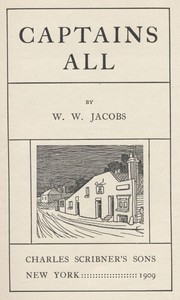
The Temptation of Samuel Burge Captains All, Book 8. — A Closer Reading

(0 User reviews)   23
Jacobs, W. W. (William Wymark), 1863-1943, Owen, Will, 1869-1957 [Illustrator] Project Gutenberg 2004 Not confirmed
Humorous stories, English; England -- Social life and customs -- Fiction; River life -- Fiction Readers of public-domain and historical texts
Project Gutenberg digital edition en

Edition facts

Words 7,172
Reading time 32 min
Text sections 1

This digital edition of The Temptation of Samuel Burge Captains All, Book 8. — A Closer Reading is described by source-level measurements including 7,172 words, 32 min estimated reading time, and 1 detected text section.

The text analysis averages about 17.3 words per sentence, while the detected sections provide another way to judge how the source is divided.

Project Gutenberg metadata also associates the work with “Humorous stories, English,” connecting these edition facts with the source record’s subject description.

In this short story, a jeweller's anticipation of a pious guest is upended when the 'converted burglar' preacher proves more interested in the household silver than in salvation. Jacobs uses precise dialogue and escalating farce to expose the gap between religious performance and genuine character.
Share
Editorial Edition Score 4.3/5

Calculated from edition completeness, EPUB availability, text structure and catalogue metadata. Not a user rating.

How this score is calculated
  • Description quality20 pts
  • Title & short description10 pts
  • Source metadata20 pts
  • Text length15 pts
  • Chapters / structure15 pts
  • EPUB file integrity20 pts

Total of 100 points, scaled to a 2.5-5.0 range. Editions with an empty description or a missing EPUB file are not scored.

Edition quality

Read the Text

Clark said it took 'is breath away."

"And he's a judge too," said the admiring jeweller.

"Now," continued Brother Burge, helping himself plentifully to pickled walnuts. "Now there ain't standing room in our Bethel when I'm expounding. People come to hear me from all parts--old and young--rich and poor--and the Apostles that don't come early 'ave to stand outside and catch the crumbs I throw 'em through the winders."

"It is enough," sighed Brother Higgs, whose own audience was frequently content to be on the wrong side of the window, "it is enough to make a man vain."

"I struggle against it, Brother," said Mr. Burge, passing his cup up for some more tea. "I fight against it hard, but once the Evil One was almost too much for me; and in spite of myself, and knowing besides that it was a plot of 'is, I nearly felt uplifted."

Brother Higgs, passing him some more beef, pressed for details.

"He sent me two policemen," replied the other, scowling darkly at the meanness of the trick. "One I might 'ave stood, but two come to being pretty near too much for me. They sat under me while I gave 'em the Word 'ot and strong, and the feeling I had standing up there and telling policemen what they ought to do I shall never forget."

"But why should policemen make you proud?" asked his puzzled listener.

Mr. Burge looked puzzled in his turn. "Why, hasn't Brother Clark told you about me?" he inquired.

Mr. Higgs shook his head. "He sort of--suggested that--that you had been a little bit wild before you came to us," he murmured apologetically.

"A--little--bit--wild?" repeated Brother Burge, in horrified accents. "ME? a little bit wild?"

"No doubt he exaggerated a little," said the jeweller hurriedly. "Being such a good man himself, no doubt things would seem wild to him that wouldn't to us--to me, I mean."

"A little bit wild," said his visitor again. "Sam Burge, the Converted Burglar, a little bit wild. Well, well!"

"Converted what?" shouted the jeweller, half-rising from his chair.

"Burglar," said the other shortly. "Why, I should think I know more about the inside o' gaols than anybody in England; I've pretty near killed three policemen, besides breaking a gent's leg and throwing a footman out of window, and then Brother Clark goes and says I've been a little bit wild. I wonder what he would 'ave?"

"But you--you've quite reformed now?" said the jeweller, resuming his seat and making a great effort to hide his consternation.

"I 'ope so," said Mr. Burge, with alarming humility; "but it's an uncertain world, and far be it from me to boast. That's why I've come here."

Mr. Higgs, only half-comprehending, sat back gasping.

"If I can stand this," pursued Brother Burge, gesticulating wildly in the direction of the shop, "if I can stand being here with all these 'ere pretty little things to be 'ad for the trouble of picking of 'em up, I can stand anything. Tempt me, I says to Brother Clark. Put me in the way o' temptation, I says. Let me see whether the Evil One or me is the strongest; let me 'ave a good old up and down with the Powers o' Darkness, and see who wins."

Mr. Higgs, gripping the edge of the table with both hands, gazed at this new Michael in speechless consternation.

"I think I see his face now," said Brother Burge, with tender enthusiasm. "All in a glow it was, and he patted me on the shoulder and says, 'I'll send you on a week's mission to Duncombe,' he says, and 'you shall stop with Brother Higgs who 'as a shop full o' cunning wrought vanities in silver and gold.'"

"But suppose," said the jeweller, finding his voice by a great effort, "suppose victory is not given unto you."

"It won't make any difference," replied his visitor. "Brother Clark promised that it shouldn't. 'If you fall, Brother,' he says, 'we'll help you up again. When you are tired of sin come back to us--there's always a welcome.'"

"But--" began the dismayed jeweller.

"We can only do our best," said Brother Burge, "the rest we must leave. I 'ave girded my loins for the fray, and taken much spiritual sustenance on the way down from this little hymn-book."

Mr. Higgs paid no heed. He sat marvelling over the fatuousness of Brother Clark and trying to think of ways and means out of the dilemma into which that gentleman's perverted enthusiasm had placed him. He wondered whether it would be possible to induce Brother Burge to sleep elsewhere by offering to bear his hotel expenses, and at last, after some hesitation, broached the subject.

"What!" exclaimed the other, pushing his plate from him and regarding him with great severity. "Go and sleep at a hotel? After Brother Clark has been and took all this trouble? Why, I wouldn't think of doing such a thing."

"Brother Clark has no right to expose you to such a trial," said Mr. Higgs with great warmth.

"I wonder what he'd say if he 'eard you," remarked Mr. Burge sternly. "After his going and making all these arrangements, for you to try and go and upset 'em. To ask me to shun the fight like a coward; to ask me to go and hide in the rear-ranks in a hotel with everything locked up, or a Coffer Pallis with nothing to steal."

"I should sleep far more comfortably if I knew that you were not undergoing this tremendous strain," said the unhappy Mr. Higgs, "and besides that, if you did give way, it would be a serious business for me --that's what I want you to look at. I am afraid that if--if unhappily you did fall, I couldn't prevent you."

"I'm sure you couldn't," said the other cordially. "That's the beauty of it; that's when the Evil One's whispers get louder and louder. Why, I could choke you between my finger and thumb. If unfortunately my fallen nature should be too strong for me, don't interfere whatever you do. I mightn't be myself."

Mr. Higgs rose and faced him gasping.

"Not even--call for--the police--I suppose," he jerked out.

"That would be interfering," said Brother Burge coldly.

The jeweller tried to think. It was past eleven. The housekeeper had gone to spend the night with an ailing sister, and a furtive glance at Brother Burge's small shifty eyes and fat unwholesome face was sufficient to deter him from leaving him alone with his property, while he went to ask the police to give an eye to his house for the night. Besides, it was more than probable that Mr. Burge would decline to allow such a proceeding. With a growing sense of his peril he resolved to try flattery.

"It was a great thing for the Brethren to secure a man like you," he said.

"I never thought they'd ha' done it," said Mr. Burge frankly. "I've 'ad all sorts trying to convert me; crying over me and praying over me. I remember the first dear good man that called me a lorst lamb. He didn't say anything else for a month."

"So upset," hazarded the jeweller.

"I broke his jor, pore feller," said Brother Burge, a sad but withal indulgent smile lighting up his face at the vagaries of his former career. "What time do you go to bed, Brother?"

"Any time," said the other reluctantly. "I suppose you are tired with your journey?"

Mr. Burge assented, and rising from his chair yawned loudly and stretched himself. In the small room with his huge arms raised he looked colossal.

"I suppose," said the jeweller, still seeking to re-assure himself, "I suppose dear Brother Clark felt pretty certain of you, else he wouldn't have sent you here?"

"Brother Clark said 'What is a jeweller's shop compared with a 'uman soul, a priceless 'uman soul?'" replied Mr. Burge. "What is a few gew-gaws to decorate them that perish, and make them vain, when you come to consider the opportunity of such a trial, and the good it'll do and the draw it'll be--if I do win--and testify to the congregation to that effect? Why, there's sermons for a lifetime in it."

"So there is," said the jeweller, trying to look cheerful. "You've got a good face, Brother Burge, and you'll do a lot of good by your preaching. There is honesty written in every feature."

Mr. Burge turned and surveyed himself in the small pier-glass. "Yes," he said, somewhat discontentedly, "I don't look enough like a burglar to suit some of 'em."

"Some people are hard to please," said the other warmly.

Mr. Burge started and eyed him thoughtfully, and then as Mr. Higgs after some hesitation walked into the shop to turn the gas out, stood in the doorway watching him. A smothered sigh as he glanced round the shop bore witness to the state of his feelings.

The jeweller hesitated again in the parlour, and then handing Brother Burge his candle turned out the gas, and led the way slowly upstairs to the room which had been prepared for the honoured visitor. He shook hands at the door and bade him an effusive good-night, his voice trembling despite himself as he expressed a hope that Mr. Burge would sleep well. He added casually that he himself was a very light sleeper.

To-night sleep of any kind was impossible. He had given up the front room to his guest, and his own window looked out on an over-grown garden. He sat trying to read, with his ears alert for the slightest sound. Brother Burge seemed to be a long time undressing. For half an hour after he had retired he could hear him moving restlessly about his room.

Twelve o'clock struck from the tower of the parish church, and was followed almost directly by the tall clock standing in the hall down-stairs. Scarcely had the sounds died away than a low moaning from the next room caused the affrighted jeweller to start from his chair and place his ear against the wall. Two or three hollow groans came through the plaster, followed by ejaculations which showed clearly that Brother Burge was at that moment engaged in a terrified combat with the Powers of Darkness to decide whether he should, or should not, rifle his host's shop. His hands clenched and his ear pressed close to the wall, the jeweller listened to a monologue which increased in interest with every word.

"I tell you I won't," said the voice in the next room with a groan, "I won't. Get thee behind me--Get thee--No, and don't shove me over to the door; if you can't get behind me without doing that, stay where you are. Yes, I know it's a fortune as well as what you do; but it ain't mine."

The listener caught his breath painfully.

"Diamond rings," continued Brother Burge in a suffocating voice. "Stop it, I tell you. No, I won't just go and look at 'em."

A series of groans which the jeweller noticed to his horror got weaker and weaker testified to the greatness of the temptation. He heard Brother Burge rise, and then a succession of panting snarls seemed to indicate a fierce bodily encounter.

"I don't--want to look at 'em," said Brother Burge in an exhausted voice. "What's--the good of--looking at 'em? It's like you, you know diamonds are my weakness. What does it matter if he is asleep? What's my knife got to do with you?"

Brother Higgs reeled back and a mist passed before his eyes. He came to himself at the sound of a door opening, and impelled with a vague idea of defending his property, snatched up his candle and looked out on to the landing.

The light fell on Brother Burge, fully dressed and holding his boots in his hand. For a moment they gazed at each other in silence; then the jeweller found his voice.

"I thought you were ill, Brother," he faltered.

An ugly scowl lit up the other's features. "Don't you tell me any of your lies," he said fiercely. "You're watching me; that's what you're doing. Spying on me."

"I thought that you were being tempted," confessed the trembling Mr. Higgs.

An expression of satisfaction which he strove to suppress appeared on Mr. Burge's face.

"So I was," he said sternly. "So I was; but that's my business. I don't want your assistance; I can fight my own battles. You go to bed--I'm going to tell the congregation I won the fight single-'anded."

"So you have, Brother," said the other eagerly; "but it's doing me good to see it. It's a lesson to me; a lesson to all of us the way you wrestled."

"I thought you was asleep," growled Brother Burge, turning back to his room and speaking over his shoulder. "You get back to bed; the fight ain't half over yet. Get back to bed and keep quiet."

The door closed behind him, and Mr. Higgs, still trembling, regained his room and looked in agony at the clock. It was only half-past twelve and the sun did not rise until six. He sat and shivered until a second instalment of groans in the next room brought him in desperation to his feet.

Brother Burge was in the toils again, and the jeweller despite his fears could not help realizing what a sensation the story of his temptation would create. Brother Burge was now going round and round his room like an animal in a cage, and sounds as of a soul wrought almost beyond endurance smote upon the listener's quivering ear. Then there was a long silence more alarming even than the noise of the conflict. Had Brother Burge won, and was he now sleeping the sleep of the righteous, or---- Mr. Higgs shivered and put his other ear to the wall. Then he heard his guest move stealthily across the floor; the boards creaked and the handle of the door turned.

Mr. Higgs started, and with a sudden flash of courage born of anger and desperation seized a small brass poker from the fire-place, and taking the candle in his other hand went out on to the landing again. Brother Burge was closing his door softly, and his face when he turned it upon the jeweller was terrible in its wrath. His small eyes snapped with fury, and his huge hands opened and shut convulsively.

"What, agin!" he said in a low growl. "After all I told you!"

Mr. Higgs backed slowly as he advanced.

"No noise," said Mr. Burge in a dreadful whisper. "One scream and I'll-- What were you going to do with that poker?"

He took a stealthy step forward.

"I--I," began the jeweller. His voice failed him. "Burglars," he mouthed, "downstairs."

"What?" said the other, pausing.

Mr. Higgs threw truth to the winds. "I heard them in the shop," he said, recovering, "that's why I took up the poker. Can't you hear them?"

Mr. Burge listened for the fraction of a second. "Nonsense," he said huskily.

"I heard them talking," said the other recklessly. "Let's go down and call the police."

"Call 'em from the winder," said Brother Burge, backing with some haste, "they might 'ave pistols or something, and they're ugly customers when they're disturbed."

He stood with strained face listening.

"Here they come," whispered the jeweller with a sudden movement of alarm.

Brother Burge turned, and bolting into his room clapped the door to and locked it. The jeweller stood dumbfounded on the landing; then he heard the window go up and the voice of Brother Burge, much strengthened by the religious exercises of the past six months, bellowing lustily for the police.

For a few seconds Mr. Higgs stood listening and wondering what explanation he should give. Still thinking, he ran downstairs, and, throwing open the pantry window, unlocked the door leading into the shop and scattered a few of his cherished possessions about the floor. By the time he had done this, people were already beating upon the street-door and exchanging hurried remarks with Mr. Burge at the window above. The jeweller shot back the bolts, and half-a-dozen neighbours, headed by the butcher opposite, clad in his nightgown and armed with a cleaver, burst into the passage. A constable came running up just as the pallid face of Brother Burge peered over the balusters. The constable went upstairs three at a time, and twisting his hand in the ex-burglar's neck-cloth bore him backwards.

"I've got one," he shouted. "Come up and hold him while I look round."

The butcher was beside him in a moment; Brother Burge struggling wildly, called loudly upon the name of Brother Higgs.

"That's all right, constable," said the latter, "that's a friend of mine."

"Friend o' yours, sir?" said the disappointed officer, still holding him.

The jeweller nodded. "Mr. Samuel Burge the Converted Burglar," he said mechanically.

"Conver----" gasped the astonished constable. "Converted burglar? Here!"

"He is a preacher now," added Mr. Higgs.

"Preacher?" retorted the constable. "Why it's as plain as a pikestaff. Confederates: his part was to go down and let 'em in."

Mr. Burge raised a piteous outcry. "I hope you may be forgiven for them words," he cried piously.

"What time did you go up to bed?" pursued the constable.

"About half-past eleven," replied Mr. Higgs.

The other grunted with satisfaction. "And he's fully dressed, with his boots off," he remarked. "Did you hear him go out of his room at all?"

"He did go out," said the jeweller truth-fully, "but----"

"I thought so," said the constable, turning to his prisoner with affectionate solicitude. "Now you come along o' me. Come quietly, because it'll be the best for you in the end."

"You won't get your skull split open then," added the butcher, toying with his cleaver.

The jeweller hesitated. He had no desire to be left alone with Mr. Burge again; and a sense of humour, which many years' association with the Primitive Apostles had not quite eradicated, strove for hearing.

"Think of the sermon it'll make," he said encouragingly to the frantic Mr. Burge, "think of the congregation!"

Brother Burge replied in language which he had not used in public since he had joined the Apostles. The butcher and another man stood guard over him while the constable searched the premises and made all secure again. Then with a final appeal to Mr. Higgs who was keeping in the background, he was pitched to the police-station by the energetic constable and five zealous assistants.

A diffidence, natural in the circumstances, prevented him from narrating the story of his temptation to the magistrates next morning, and Mr. Higgs was equally reticent. He was put back while the police communicated with London, and in the meantime Brother Clark and a band of Apostles flanked down to his support.

On his second appearance before the magistrates he was confronted with his past; and his past to the great astonishment of the Brethren being free from all blemish with the solitary exception of fourteen days for stealing milk-cans, he was discharged with a caution. The disillusioned Primitive Apostles also gave him his freedom.

End of Project Gutenberg's The Temptation of Samuel Burge, by W.W. Jacobs

The story begins not with the title character but with Mr. Higgs, a jeweller, waiting impatiently for supper and for his guest, Brother Samuel Burge, a preacher of the Seventh Day Primitive Apostles. The housekeeper’s solemn remarks about Brother Simpson, who called the kitchen smells “flesh-pots of Egypt,” establish a pattern of pious language that will be comically undercut. Higgs’s own “earthly feelings” are strong, and his hunger is a small but telling detail that Jacobs will later expand into a larger moral appetite.

The Preacher’s Entrance and the Weight of Expectation

Brother Burge is described as a “tall stout man” with a “short stubby beard streaked with grey” and “beady eyes which lurked behind a pair of clumsy spectacles.” The contrast between his appearance and the housekeeper’s ideal of a saintly ascetic is immediate. His handshake is a “huge grip,” and his speech is peppered with theatrical piety: “Oh, 'ow my eyes have” — the sentence breaks off in the excerpt, but the tone is set. Jacobs uses the housekeeper’s reverence and Higgs’s curiosity to build a comic tension: the reader suspects that Burge’s conversion may be less than complete.

The Midnight Encounter and the Poker

The middle excerpt shows the story’s central comic reversal. Higgs, alarmed by noises, picks up a “small brass poker” and encounters Burge on the landing. Burge’s face is “terrible in its wrath,” his small eyes “snapped with fury,” and his hands “opened and shut convulsively.” The language of religious fervor is replaced by that of a cornered animal. When Higgs invents a burglary, Burge’s response is not prayer but panic: he bolts into his room, locks the door, and bellows for the police from the window. The phrase “much strengthened by the religious exercises of the past six months” is a dry authorial comment on the gap between profession and instinct.

The Farce of the Arrest

In the later excerpt, the farce escalates. Higgs, to cover his lie, stages a burglary by scattering his own possessions. The neighbours arrive, led by a butcher “clad in his nightgown and armed with a cleaver.” The constable immediately suspects Burge, noting he is “fully dressed, with his boots off” and had left his room. Burge’s cries of “Brother Higgs!” are ignored. The constable’s reasoning — “Confederates: his part was to go down and let 'em in” — is a logical deduction from the evidence, but the reader knows it is false. Jacobs builds the comedy on the irony that Burge’s past as a burglar makes him the perfect scapegoat, and his present piety only makes him seem more suspicious.

Voice and the Unreliable Narrator

Jacobs’s narrative voice is crucial to the story’s effect. The third-person narrator reports dialogue and action without overt judgment, letting the characters reveal themselves. The housekeeper’s solemnity, Higgs’s passive-aggressive hunger, and Burge’s sudden shifts from unctuousness to rage are all shown through their words and gestures. The story’s humor depends on the reader’s ability to see the gap between what characters say and what they do. The excerpts do not reveal the ending, but the pattern suggests that Burge’s “conversion” is a convenient fiction, and that Higgs’s manipulation will have consequences.

Readers should pay close attention to how Jacobs uses physical objects — the poker, the candle, the cleaver — as props in a comedy of mistaken identity and self-interest. The story’s brevity (under 7,200 words) rewards a second reading to catch the early hints of Burge’s true nature. The title’s word “temptation” applies to both characters: Burge is tempted by the jeweller’s wares, but Higgs is tempted by the chance to expose hypocrisy. The balance of sympathy shifts throughout, and the final outcome is left ambiguous in the excerpts.

Reading how Burge’s pious guest merely performs sanctity while eyeing the silver, I found myself thinking of Greatheart’s quieter meditations on the same ache — that hollow space where faith becomes posture. It lingered with me afterwards, that contrast between the farce’s sharp edges and the other book’s gentle sorrow. Both, in their way, mourn what we lose when character gives way to show. Greatheart — Background and Themes felt like a soft echo of that same unease.

There are no reviews for this eBook.

0
0 out of 5 (0 User reviews )

Add a Review

Your Rating *
  • ...
    Theresa Smith - 1 month ago
    An enjoyable addition to the series, with a strong central theme and engaging writing. Samuel Burge is a relatable character, and his temptation is depicted with nuance. The story is charming but feels a bit rushed at the end, and some secondary characters could use more development. Still, it's a worthwhile read for those following the collection.

  • ...
    Heather Reynolds - 1 month ago
    The plot meanders, and the moral lesson is delivered with a heavy hand. Samuel Burge is not compelling enough to carry the story, and his internal conflict feels artificial. The era's tendencies towards preachiness detract from the narrative, making it a dated and uninspiring read. Not one of the author's better works.

  • ...
    Elizabeth Love - 1 month ago
    This installment of the 'Captains All' series is a masterful blend of wit and introspection. 'The Temptation of Samuel Burge' explores moral dilemmas with sharp satire and genuine warmth. The characters feel alive, and the dialogue crackles with personality. Fans of classic short fiction will appreciate the layered storytelling and the quiet humor that runs throughout.


Reader reflection

Before you leave, reflect on the book

Use these questions to collect your thoughts before moving on.
Your progress 0 / 10
1

Where are you in your reading?

2

Was reading this book enjoyable?

3

How likely are you to recommend this book?

4

Did the language feel accessible?

Related eBooks