1

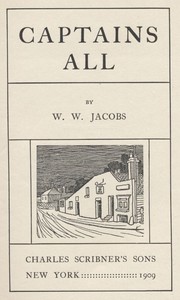
The Nest Egg Captains All, Book 3. — Background and Themes
(11 User reviews)
1442
Project Gutenberg
2004
Not confirmed
Humorous stories, English; England -- Social life and customs -- Fiction; River life -- Fiction
Readers of public-domain and historical texts
Project Gutenberg digital edition
en
Edition facts
Words
7,440
Reading time
33 min
Text sections
1
The catalog record for The Nest Egg Captains All, Book 3. — Background and Themes provides practical reading context through 7,440 words, 33 min estimated reading time, and 1 detected text section.
The text analysis averages about 18.4 words per sentence, while the detected sections provide another way to judge how the source is divided.
Project Gutenberg metadata also associates the work with “Humorous stories, English,” connecting these edition facts with the source record’s subject description.
Source:
Project Gutenberg record #11183
In W.W. Jacobs's comic short story, a night-watchman recounts how a sailor's scheme to retrieve his savings from his fiancée backfires through a series of artful deceptions and ironic reversals.
Editorial Edition Score
4.4/5
★★★★★
★★★★★
Calculated from edition completeness, EPUB availability, text structure and catalogue metadata. Not a user rating.
How this score is calculated
- Description quality20 pts
- Title & short description10 pts
- Source metadata20 pts
- Text length15 pts
- Chapters / structure15 pts
- EPUB file integrity20 pts
Total of 100 points, scaled to a 2.5-5.0 range. Editions with an empty description or a missing EPUB file are not scored.
Edition quality
Read the Text
They was just finishing their tea as 'e got there, and they all seemed so pleased to see 'im that it made it worse than ever for 'im. Mrs. Cook, who 'ad pretty near finished, gave 'im her own cup to drink out of, and said that she 'ad dreamt of 'im the night afore last, and old Cook said that he 'ad got so good-looking 'e shouldn't 'ave known him.
"I should 'ave passed 'im in the street," he ses. "I never see such an alteration."
"They'll be a nice-looking couple," ses his wife, looking at a young chap, named George Smith, that 'ad been sitting next to Emma.
Charlie Tagg filled 'is mouth with bread and butter, and wondered 'ow he was to begin. He squeezed Emma's 'and just for the sake of keeping up appearances, and all the time 'e was thinking of the other gal waiting for 'im thousands o' miles away.
"You've come 'ome just in the nick o' time," ses old Cook; "if you'd done it o' purpose you couldn't 'ave arranged it better."
"Somebody's birthday?" ses Charlie, trying to smile.
Old Cook shook his 'ead. "Though mine is next Wednesday," he ses, "and thank you for thinking of it. No; you're just in time for the biggest bargain in the chandlery line that anybody ever 'ad a chance of. If you 'adn't ha' come back we should have 'ad to ha' done it without you."
"Eighty pounds," ses Mrs. Cook, smiling at Charlie. "With the money Emma's got saved and your wages this trip you'll 'ave plenty. You must come round arter tea and 'ave a look at it."
"Little place not arf a mile from 'ere," ses old Cook. "Properly worked up, the way Emma'll do it, it'll be a little fortune. I wish I'd had a chance like it in my young time."
He sat shaking his 'ead to think wot he'd lost, and Charlie Tagg sat staring at 'im and wondering wot he was to do.
"My idea is for Charlie to go for a few more v'y'ges arter they're married while Emma works up the business," ses Mrs. Cook; "she'll be all right with young Bill and Sarah Ann to 'elp her and keep 'er company while he's away."
"We'll see as she ain't lonely," ses George Smith, turning to Charlie.
Charlie Tagg gave a bit of a cough and said it wanted considering. He said it was no good doing things in a 'urry and then repenting of 'em all the rest of your life. And 'e said he'd been given to understand that chandlery wasn't wot it 'ad been, and some of the cleverest people 'e knew thought that it would be worse before it was better. By the time he'd finished they was all looking at 'im as though they couldn't believe their ears.
"You just step round and 'ave a look at the place," ses old Cook; "if that don't make you alter your tune, call me a sinner."
Charlie Tagg felt as though 'e could ha' called 'im a lot o' worse things than that, but he took up 'is hat and Mrs. Cook and Emma got their bonnets on and they went round.
"I don't think much of it for eighty pounds," ses Charlie, beginning his artfulness as they came near a big shop, with plate-glass and a double front.
"Eh?" ses old Cook, staring at 'im. "Why, that ain't the place. Why, you wouldn't get that for eight 'undred."
"Well, I don't think much of it," ses Charlie; "if it's worse than that I can't look at it--I can't, indeed."
"You ain't been drinking, Charlie?" ses old Cook, in a puzzled voice.
"Certainly not," ses Charlie.
He was pleased to see 'ow anxious they all looked, and when they did come to the shop 'e set up a laugh that old Cook said chilled the marrer in 'is bones. He stood looking in a 'elpless sort o' way at his wife and Emma, and then at last he ses, "There it is; and a fair bargain at the price."
"I s'pose you ain't been drinking?" ses Charlie.
"Wot's the matter with it?" ses Mrs. Cook flaring up.
"Come inside and look at it," ses Emma, taking 'old of his arm.
"Not me," ses Charlie, hanging back. "Why, I wouldn't take it at a gift."
He stood there on the kerbstone, and all they could do 'e wouldn't budge. He said it was a bad road and a little shop, and 'ad got a look about it he didn't like. They walked back 'ome like a funeral procession, and Emma 'ad to keep saying "_H's!_" in w'ispers to 'er mother all the way.
"I don't know wot Charlie does want, I'm sure," ses Mrs. Cook, taking off 'er bonnet as soon as she got indoors and pitching it on the chair he was just going to set down on.
"It's so awk'ard," ses old Cook, rubbing his 'cad. "Fact is, Charlie, we pretty near gave 'em to understand as we'd buy it."
"It's as good as settled," ses Mrs. Cook, trembling all over with temper.
"They won't settle till they get the money," ses Charlie. "You may make your mind easy about that."
"Emma's drawn it all out of the bank ready," ses old Cook, eager like.
Charlie felt 'ot and cold all over. "I'd better take care of it," he ses, in a trembling voice. "You might be robbed."
"So might you be," ses Mrs. Cook. "Don't you worry; it's in a safe place."
"Sailormen are always being robbed," ses George Smith, who 'ad been helping young Bill with 'is sums while they 'ad gone to look at the shop. "There's more sailormen robbed than all the rest put together."
"They won't rob Charlie," ses Mrs. Cook, pressing 'er lips together. "I'll take care o' that."
Charlie tried to laugh, but 'e made such a queer noise that young Bill made a large blot on 'is exercise-book, and old Cook, wot was lighting his pipe, burnt 'is fingers through not looking wot 'e was doing.
"You see," ses Charlie, "if I was robbed, which ain't at all likely, it 'ud only be me losing my own money; but if you was robbed of it you'd never forgive yourselves."
"I dessay I should get over it," ses Mrs. Cook, sniffing. "I'd 'ave a try, at all events."
Charlie started to laugh agin, and old Cook, who had struck another match, blew it out and waited till he'd finished.
"The whole truth is," ses Charlie, looking round, "I've got something better to do with the money. I've got a chance offered me that'll make me able to double it afore you know where you are."
"Not afore I know where I am," ses Mrs. Cook, with a laugh that was worse than Charlie's.
"The chance of a lifetime," ses Charlie, trying to keep 'is temper. "I can't tell you wot it is, because I've promised to keep it secret for a time. You'll be surprised when I do tell you."
"If I wait till then till I'm surprised," ses Mrs. Cook, "I shall 'ave to wait a long time. My advice to you is to take that shop and ha' done with it."
Charlie sat there arguing all the evening, but it was no good, and the idea o' them people sitting there and refusing to let 'im have his own money pretty near sent 'im crazy. It was all 'e could do to kiss Emma good-night, and 'e couldn't have 'elped slamming the front door if he'd been paid for it. The only comfort he 'ad got left was the Sydney gal's photygraph, and he took that out and looked at it under nearly every lamp-post he passed.
He went round the next night and 'ad an-other try to get 'is money, but it was no use; and all the good he done was to make Mrs. Cook in such a temper that she 'ad to go to bed before he 'ad arf finished. It was no good talking to old Cook and Emma, because they daren't do anything without 'er, and it was no good calling things up the stairs to her because she didn't answer. Three nights running Mrs. Cook went off to bed afore eight o'clock, for fear she should say something to 'im as she'd be sorry for arterwards; and for three nights Charlie made 'imself so disagreeable that Emma told 'im plain the sooner 'e went back to sea agin the better she should like it. The only one who seemed to enjoy it was George Smith, and 'e used to bring bits out o' newspapers and read to 'em, showing 'ow silly people was done out of their money.
On the fourth night Charlie dropped it and made 'imself so amiable that Mrs. Cook stayed up and made 'im a Welsh rare-bit for 'is supper, and made 'im drink two glasses o' beer instead o' one, while old Cook sat and drank three glasses o' water just out of temper, and to show that 'e didn't mind. When she started on the chandler's shop agin Charlie said he'd think it over, and when 'e went away Mrs. Cook called 'im her sailor-boy and wished 'im pleasant dreams.
But Charlie Tagg 'ad got better things to do than to dream, and 'e sat up in bed arf the night thinking out a new plan he'd thought of to get that money. When 'e did fall asleep at last 'e dreamt of taking a little farm in Australia and riding about on 'orseback with the Sydney gal watching his men at work.
In the morning he went and hunted up a shipmate of 'is, a young feller named Jack Bates. Jack was one o' these 'ere chaps, nobody's enemy but their own, as the saying is; a good-'arted, free-'anded chap as you could wish to see. Everybody liked 'im, and the ship's cat loved 'im. He'd ha' sold the shirt off 'is back to oblige a pal, and three times in one week he got 'is face scratched for trying to prevent 'usbands knocking their wives about.
Charlie Tagg went to 'im because he was the only man 'e could trust, and for over arf an hour he was telling Jack Bates all 'is troubles, and at last, as a great favour, he let 'im see the Sydney gal's photygraph, and told him that all that pore gal's future 'appiness depended upon 'im.
"I'll step round to-night and rob 'em of that seventy-two pounds," ses Jack; "it's your money, and you've a right to it."
Charlie shook his 'ead. "That wouldn't do," he ses; "besides, I don't know where they keep it. No; I've got a better plan than that. Come round to the Crooked Billet, so as we can talk it over in peace and quiet."
He stood Jack three or four arf-pints afore 'e told 'im his plan, and Jack was so pleased with it that he wanted to start at once, but Charlie persuaded 'im to wait.
"And don't you spare me, mind, out o' friendship," ses Charlie, "because the blacker you paint me the better I shall like it."
"You trust me, mate," ses Jack Bates; "if I don't get that seventy-two pounds for you, you may call me a Dutchman. Why, it's fair robbery, I call it, sticking to your money like that."
They spent the rest o' the day together, and when evening came Charlie went off to the Cooks'. Emma 'ad arf expected they was going to a theayter that night, but Charlie said he wasn't feeling the thing, and he sat there so quiet and miserable they didn't know wot to make of 'im.
"'Ave you got any trouble on your mind, Charlie," ses Mrs. Cook, "or is it the tooth-ache?"
"It ain't the toothache," ses Charlie.
He sat there pulling a long face and staring at the floor, but all Mrs. Cook and Emma could do 'e wouldn't tell them wot was the matter with 'im. He said 'e didn't want to worry other people with 'is troubles; let everybody bear their own, that was 'is motto. Even when George Smith offered to go to the theayter with Emma instead of 'im he didn't fire up, and, if it 'adn't ha' been for Mrs. Cook, George wouldn't ha' been sorry that 'e spoke.
"Theayters ain't for me," ses Charlie, with a groan. "I'm more likely to go to gaol, so far as I can see, than a theayter."
Mrs. Cook and Emma both screamed and Sarah Ann did 'er first highstericks, and very well, too, considering that she 'ad only just turned fifteen.
"Gaol!" ses old Cook, as soon as they 'ad quieted Sarah Ann with a bowl o' cold water that young Bill 'ad the presence o' mind to go and fetch. "Gaol! What for?"
"You wouldn't believe if I was to tell you." ses Charlie, getting up to go, "and besides, I don't want any of you to think as 'ow I am worse than wot I am."
He shook his 'cad at them sorrowful-like, and afore they could stop 'im he 'ad gone. Old Cook shouted arter 'im, but it was no use, and the others was running into the scullery to fill the bowl agin for Emma.
Mrs. Cook went round to 'is lodgings next morning, but found that 'e was out. They began to fancy all sorts o' things then, but Charlie turned up agin that evening more miserable than ever.
"I went round to see you this morning," ses Mrs. Cook, "but you wasn't at 'ome."
"I never am, 'ardly," ses Charlie. "I can't be--it ain't safe."
"Why not?" ses Mrs. Cook, fidgeting.
"If I was to tell you, you'd lose your good opinion of me," ses Charlie.
"It wouldn't be much to lose," ses Mrs. Cook, firing up.
Charlie didn't answer 'er. When he did speak he spoke to the old man, and he was so down-'arted that 'e gave 'im the chills a'most, He 'ardly took any notice of Emma, and, when Mrs. Cook spoke about the shop agin, said that chandlers' shops was for happy people, not for 'im.
By the time they sat down to supper they was nearly all as miserable as Charlie 'imself. From words he let drop they all seemed to 'ave the idea that the police was arter 'im, and Mrs. Cook was just asking 'im for wot she called the third and last time, but wot was more likely the hundred and third, wot he'd done, when there was a knock at the front door, so loud and so sudden that old Cook and young Bill both cut their mouths at the same time.
"Anybody 'ere o' the name of Emma Cook?" ses a man's voice, when young Bill opened the door.
"She's inside," ses the boy, and the next moment Jack Bates followed 'im into the room, and then fell back with a start as 'e saw Charlie Tagg.
"Ho, 'ere you are, are you?" he ses, looking at 'im very black. "Wot's the matter?" ses Mrs. Cook, very sharp.
"I didn't expect to 'ave the pleasure o' seeing you 'ere, my lad," ses Jack, still staring at Charlie, and twisting 'is face up into awful scowls. "Which is Emma Cook?"
"Miss Cook is my name," ses Emma, very sharp. "Wot d'ye want?"
"Very good," ses Jack Bates, looking at Charlie agin; "then p'r'aps you'll do me the kindness of telling that lie o' yours agin afore this young lady."
"It's the truth," ses Charlie, looking down at 'is plate.
"If somebody don't tell me wot all this is about in two minutes, I shall do something desprit," ses Mrs. Cook, getting up.
"This 'ere--er--man," ses Jack Bates, pointing at Charlie, "owes me seventy-five pounds and won't pay. When I ask 'im for it he ses a party he's keeping company with, by the name of Emma Cook, 'as got it, and he can't get it."
"So she has," ses Charlie, without looking up.
"Wot does 'e owe you the money for?" ses Mrs. Cook.
"'Cos I lent it to 'im," ses Jack.
"Lent it? What for?" ses Mrs. Cook.
"'Cos I was a fool, I s'pose," ses jack Bates; "a good-natured fool. Anyway, I'm sick and tired of asking for it, and if I don't get it to-night I'm going to see the police about it."
He sat down on a chair with 'is hat cocked over one eye, and they all sat staring at 'im as though they didn't know wot to say next.
"So this is wot you meant when you said you'd got the chance of a lifetime, is it?" ses Mrs. Cook to Charlie. "This is wot you wanted it for, is it? Wot did you borrow all that money for?"
"Spend," ses Charlie, in a sulky voice.
"Spend!" ses Mrs. Cook, with a scream; "wot in?"
"Drink and cards mostly," ses Jack Bates, remembering wot Charlie 'ad told 'im about blackening 'is character.
You might ha' heard a pin drop a'most, and Charlie sat there without saying a word.
"Charlie's been led away," ses Mrs. Cook, looking 'ard at Jack Bates. "I s'pose you lent 'im the money to win it back from 'im at cards, didn't you?"
"And gave 'im too much licker fust," ses old Cook. "I've 'eard of your kind. If Charlie takes my advice 'e won't pay you a farthing. I should let you do your worst if I was 'im; that's wot I should do. You've got a low face; a nasty, ugly, low face."
"One o' the worst I ever see," ses Mrs. Cook. "It looks as though it might ha' been cut out o' the Police News."
"'Owever could you ha' trusted a man with a face like that, Charlie?" ses old Cook. "Come away from 'im, Bill; I don't like such a chap in the room."
Jack Bates began to feel very awk'ard. They was all glaring at 'im as though they could eat 'im, and he wasn't used to such treatment. And, as a matter o' fact, he'd got a very good-'arted face.
"You go out o' that door," ses old Cook, pointing to it. "Go and do your worst. You won't get any money 'ere."
"Stop a minute," ses Emma, and afore they could stop 'er she ran upstairs. Mrs. Cook went arter 'er and 'igh words was heard up in the bedroom, but by-and-by Emma came down holding her head very 'igh and looking at Jack Bates as though he was dirt.
"How am I to know Charlie owes you this money?" she ses.
Jack Bates turned very red, and arter fumbling in 'is pockets took out about a dozen dirty bits o' paper, which Charlie 'ad given 'im for I O U's. Emma read 'em all, and then she threw a little parcel on the table.
"There's your money," she ses; "take it and go."
Mrs. Cook and 'er father began to call out, but it was no good.
"There's seventy-two pounds there," ses Emma, who was very pale; "and 'ere's a ring you can have to 'elp make up the rest." And she drew Charlie's ring off and throwed it on the table. "I've done with 'im for good," she ses, with a look at 'er mother.
Jack Bates took up the money and the ring and stood there looking at 'er and trying to think wot to say. He'd always been uncommon partial to the sex, and it did seem 'ard to stand there and take all that on account of Charlie Tagg.
"I only wanted my own," he ses, at last, shuffling about the floor.
"Well, you've got it," ses Mrs. Cook, "and now you can go."
"You're pi'soning the air of my front parlour," ses old Cook, opening the winder a little at the top.
"P'r'aps I ain't so bad as you think I am," ses Jack Bates, still looking at Emma, and with that 'e walked over to Charlie and dumped down the money on the table in front of 'im. "Take it," he ses, "and don't borrow any more. I make you a free gift of it. P'r'aps my 'art ain't as black as my face," he ses, turning to Mrs. Cook.
They was all so surprised at fust that they couldn't speak, but old Cook smiled at 'im and put the winder up agin. And Charlie Tagg sat there arf mad with temper, locking as though 'e could eat Jack Bates without any salt, as the saying is.
"I--I can't take it," he ses at last, with a stammer.
"Can't take it? Why not?" ses old Cook, staring. "This gentleman 'as given it to you." "A free gift," ses Mrs. Cook, smiling at Jack very sweet.
The night-watchman who narrates this story opens with a wry reflection on artfulness, claiming it 'don't pay always' and that he has 'surprised more than one' by pretending to be stupider than he is. This framing sets up a tale of layered deceit, where the listener is primed to watch for the gap between appearance and reality. The narrative voice is distinctive: colloquial, self-correcting, and laced with comic hesitation, as when the watchman revises his own phrasing three times to describe his feigned stupidity. Jacobs uses this oral storytelling style to create intimacy and suspense, drawing the reader into the watchman's world of dockside wisdom and domestic comedy.
The Watchman's Voice and Self-Presentation
The story is delivered entirely in the night-watchman's vernacular, a working-class London speech full of dropped aitches, double negatives, and rhythmic repetition. His opening remarks about artfulness are a performance in themselves: he pauses, corrects himself, and finally lands on a precise formulation—'More stupid than wot they thought I looked'—as if polishing a joke. This self-conscious narration establishes him as a man who enjoys his own cleverness and wants his audience to appreciate it. He also undercuts his authority by admitting his wife got the better of him, a confession that humanizes him and hints at the story's theme of domestic power. The watchman's voice is the story's engine, and Jacobs sustains it without slipping into caricature, giving each phrase a natural, spoken rhythm.
The Sailor's Dilemma and the Artfulness of Deception
Charlie Tagg, a steady young sailor, has saved seventy-two pounds with his London fiancée Emma Cook for a future shop. But in Sydney he promises marriage to another woman and needs the money back. His problem is practical: how to retrieve the savings without revealing his betrayal. The watchman notes that Charlie's head was 'all in a maze' trying to solve it. Charlie's plan—to borrow a friend's help in pretending to be a bad character—is a classic comic scheme that relies on acting and misdirection. Jacobs presents the dilemma with economy: the sum of money is specific (seventy-two pounds and seventeen-and-six of Emma's own), and the geography (Sydney to Poplar) underscores the distance between Charlie's two lives. The scheme's fragility is evident from the start, as the watchman's framing warns that sudden artfulness rarely succeeds.
The Confrontation Scene and Comic Reversals
The climax unfolds in the Cook family's front parlour, where Jack Bates, Charlie's accomplice, pretends to be a creditor demanding repayment. The dialogue crackles with indignation and misunderstanding. Mrs. Cook and old Cook attack Jack's face, calling it 'low' and 'one o' the worst I ever see,' a running gag that contrasts with Jack's own view that he has 'a very good-'arted face.' Emma, pale and proud, throws the money and Charlie's ring on the table. But then Jack, moved by Emma's dignity, abruptly returns the money to Charlie, declaring it a 'free gift.' This reversal shocks everyone, especially Charlie, who is left 'arf mad with temper' because the gift undermines his plan. Jacobs builds the scene through escalating insults and physical details—the window opened and closed—that heighten the farce.
Dialogue as a Tool of Character and Comedy
Jacobs relies almost entirely on dialogue to advance the plot and reveal character. Each character speaks in a distinct register: the watchman's ruminative, self-amused tone; Charlie's stammering evasions; Emma's clipped dignity; Mrs. Cook's sharp suspicions; old Cook's blustering insults. The comedy emerges from the gap between what characters say and what they mean, and from the rapid-fire exchanges where misunderstandings pile up. For instance, when Jack says he 'only wanted my own,' Mrs. Cook retorts, 'Well, you've got it, and now you can go.' The dialogue also carries the story's moral weight: Emma's quiet defiance and Jack's sudden generosity complicate the simple scheme, suggesting that artfulness can be undone by genuine feeling. Jacobs's ear for speech rhythms gives the story a theatrical immediacy.
Readers will find that the pleasure of this story lies less in the plot's outcome than in the watchman's telling and the vivid, quarrelsome voices of the Cook family. Jacobs's skill lies in making a simple anecdote feel like a lived-in world, where every character has a history and a point of view. Pay attention to the small physical details—the rusty nail, the opened window, the dirty IOUs—that ground the comedy in a tangible, working-class setting.
Reading about the night-watchman’s tale, I remembered my own grandfather’s fumbled attempts to hide money from my grandmother—such careful plots, so gently undone. Only an Incident — Edition Insights stirred that same ache, the quiet comedy of our best-laid plans collapsing into something softer, almost tender, like a tea stain spreading on linen.
John Roberts
2 weeks agoMadison Torres
1 month agoIsaac Williams
3 weeks agoAvery Johnson
1 month ago-

Erik Barnes - 1 month ago
As a standalone, 'The Nest Egg' may leave readers unfamiliar with the series lost, as it relies heavily on previous installments. Even for fans, the plot feels formulaic and predictable. The humor, while present, lacks the sharpness of the earlier books. This installment seems like a filler rather than a necessary part of the series, which is disappointing. -
Cynthia Phillip Young - 1 month ago
A delightful addition to the 'Captains All' series! 'The Nest Egg' serves up a witty and adventurous tale that is both entertaining and heartwarming. The characters are vividly drawn, and the interplay between them is a joy to read. The plot is cleverly constructed, with plenty of surprises to keep you hooked. A delightful read that fans of comic adventure will adore. -
Donald Cisneros - 1 month ago
Another enjoyable installment in the series, 'The Nest Egg' delivers light-hearted fun with its likable characters and clever dialogue. The story moves at a good pace, though some readers might find the plot a bit thin compared to earlier books. Still, it's a pleasant escape that will satisfy those who enjoy adventures with a humorous touch.
Reader reflection
Take a moment to reflect on this book
Create a short personal record of your experience with this book.
Your progress
0
/
10
2
How much did you enjoy the reading experience?
3
Would you encourage someone else to read it?
4
What was the reading difficulty like?
5
What was its emotional impact?
6
Could you see yourself revisiting this book?
7
Did the book offer a fresh perspective?
8
How valuable was this book for your own interests?
9
What is the main idea you are taking away?
10





Gabriel Torres
1 week ago