
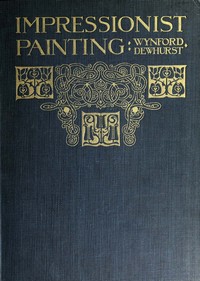
Impressionist painting: its genesis and development by Wynford Dewhurst
Forget the dry, textbook version of art history. Wynford Dewhurst's 'Impressionist Painting: Its Genesis and Development' is something much more lively: a firsthand account and a fiery argument. Published in 1904, it was written by a man who wasn't just a scholar, but an English painter who trained in Paris and knew many of the Impressionist artists personally.
The Story
The book isn't a novel, but its core idea has all the drama of one. Dewhurst lays out a bold claim: Impressionism, that most iconic of French art movements, wasn't born in a vacuum. He argues that English artists, particularly John Constable and J.M.W. Turner, were the true pioneers. He points to their obsession with capturing fleeting light, weather, and atmosphere outdoors—decades before Monet set up his easel. Dewhurst walks us through the technical and philosophical links, using his own experience and observations to build his case. The book is his evidence file, trying to convince the world that art history got the story wrong.
Why You Should Read It
What makes this book so compelling isn't just the argument—it's the perspective. You're getting the view from 1904, when these paintings were still modern and controversial. Dewhurst writes with the urgency of someone trying to correct the record while people's memories are still fresh. It feels less like a lecture and more like listening to a passionate, slightly stubborn expert over coffee. He’s not a neutral observer; he’s a champion for his thesis, and that energy is infectious. It reminds you that art history isn't a set of fixed facts, but a conversation—and sometimes a debate—that evolves over time.
Final Verdict
This book is perfect for art lovers who enjoy a good historical debate and want to move beyond the standard museum-label descriptions. It's for anyone who’s ever wondered, 'But where did that idea *really* come from?' Be warned: it's an older text, so the language has a period feel, and modern scholarship has, of course, moved on. But that's partly the point. Reading Dewhurst is like uncovering a fascinating, opinionated time capsule. It won't give you the final word on Impressionism, but it will give you a brilliant, contentious, and utterly human chapter in its ongoing story.
No rights are reserved for this publication. Distribute this work to help spread literacy.
Charles Smith
1 year agoThe formatting on this digital edition is flawless.
Kevin Garcia
9 months agoFast paced, good book.
Patricia Thompson
1 year agoA must-have for anyone studying this subject.
Liam Scott
10 months agoAmazing book.









John Smith
7 months agoIt’s rare to find such a well-structured narrative nowadays, the historical context mentioned in the early chapters is quite enlightening. Truly a masterpiece of digital educational material.