About 33 minutes
The Nest Egg Captains All, Book 3. — Background and Themes
Historical Psychological Social Fiction
7,440 recorded words. 0 minutes difference from this book's estimate.
View Gutenberg source #11183
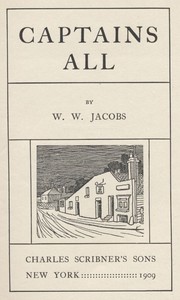
The source record for Captains All Captains All, Part 1. — Background and Themes measures this digital text at 7,508 words, 33 min estimated reading time, and 1 detected text section.
The text analysis averages about 19.7 words per sentence, while the detected sections provide another way to judge how the source is divided.
Project Gutenberg metadata also associates the work with “Humorous stories, English,” connecting these edition facts with the source record’s subject description.
Explore this collection
These alternatives are selected using recorded categories and estimated reading time.
About 33 minutes
Historical Psychological Social Fiction
7,440 recorded words. 0 minutes difference from this book's estimate.
View Gutenberg source #11183About 32 minutes
Historical Psychological Social Fiction
7,219 recorded words. 1 minutes difference from this book's estimate.
View Gutenberg source #9218About 32 minutes
Historical Psychological Social Fiction
7,133 recorded words. 1 minutes difference from this book's estimate.
View Gutenberg source #11184Search stored excerpts and compare books → Choose by your preferences →
Choices use stored catalog measurements. Estimates vary with reading speed. A shared category is a catalog label, not a claim that two books have the same argument or literary quality.
Search reads excerpt text stored with this catalog and links to its associated Gutenberg record. The connection is stored in the site database; this tool does not recheck that every excerpt is word-for-word identical to that external record. Excerpt search does not cover every chapter and does not verify historical publication dates.
Catalog snapshot checked: 2026-09-25. Coverage: 97 public books, 97 available source excerpts.
Read the complete public-domain text at its original source.
Read on Project GutenbergThe night-watchman's voice opens this story with a general grumble about sailormen ashore, then narrows to old Sam Small, a man who 'used to grumble awful about the sea' after spending his money. The narration is thick with dialect—'arter,' 'wot,' ''artbreaking'—and a wry, understated humor that comes from watching characters fail to see themselves clearly. Sam's sudden cheerfulness, new necktie, and twice-daily washing signal a change his shipmates misread as love or madness. The comedy lies in the gap between what they suspect and what Sam is actually doing: methodically courting a widow while they have already given up.
The night-watchman's narration is the story's engine, and his dialect does more than add local color. Words like 'pore chap,' 'gorn mad,' and 'arf-crowns' create a specific social world where men measure success in small coins and physical comfort. The watchman's voice is not neutral; he editorializes with phrases like 'pore chap' and 'it was 'artbreaking,' shaping our sympathy. When Sam cleans his teeth in front of his mates, the act is rendered absurd by the dialect: 'he took a tooth-brush wrapped in paper out of 'is pocket and began to clean 'is teeth.' The mundane becomes comic through the precise, unadorned reporting of a man who values directness over refinement.
Sam's courtship unfolds as a quiet victory over his friends Ginger Dick and Peter Russet, who have already been rejected. The humor depends on what the reader knows that the characters do not. Sam 'kept fidgeting about as though 'e'd got something on his mind' while the others tease him about being in love. When he finally reveals his success—'She said 'yes' at two o'clock in the arternoon'—the triumph is undercut by Ginger's delayed confession: 'We ought to ha' done,' he says, hinting they knew something all along. The story's structure relies on these withheld revelations, each one deflating the previous speaker's confidence.
Jacobs builds scenes around small, telling actions. Sam's courtship of Mrs. Finch is measured in inches: 'squeezing Mrs. Finch's 'and at ha'-past seven, he 'ad got best part of his arm round 'er waist by a quarter to ten.' The precision of the timing makes the gesture ridiculous. Later, Sam lies in bed 'smiling to 'imself to such an extent that people thought 'e was mad,' and when his friends come home, he 'put his 'ead under the bedclothes and laughed till the bed shook.' These physical details—the toothbrush, the arm around the waist, the shaking bed—anchor the comedy in the body, making abstract emotions like jealousy and satisfaction visible and funny.
The provided text breaks off before the story ends, leaving Sam's engagement unresolved. Ginger's ominous hint—'If I'd known you was going to be in such a hurry I might ha' told you before'—suggests a reversal, but the excerpt does not reveal it. Readers should note that the night-watchman's frame story may return to the present, and that Sam's confidence might be misplaced. The humor depends on dramatic irony, and without the full text, we cannot know whether Sam's 'way with the gals' succeeds or collapses. The excerpt is a self-contained comic episode, but its punchline remains unwritten in these pages.
This story rewards attention to its spoken rhythms and the way Jacobs uses the night-watchman's voice to filter action through a wry, working-class perspective. The humor is cumulative, built from repeated patterns of grumbling, boasting, and deflation. Readers may enjoy comparing Sam's self-assurance with the hints of trouble that Ginger and Peter let slip. The incomplete ending is not a flaw but an invitation to imagine how the watchman might finish his tale.
Waiting on the widow’s porch, I remembered my own grandfather’s halting courtship—his hat turning in his hands like a confession. Jacobs catches that quiet absurdity perfectly. The Bent Twig — A Closer Reading gave me the same tender ache, watching someone bend toward love while pretending not to. Strange how two such different books share that exact hum of withheld hope.
A brief reflection can help important ideas stay with you longer.